on parents

It’s been a little while, hasn’t it? I wish I had news to share, or really anything other than this to share, but life has a way of kicking you when you’re already down. I’d started trying to finish my fantasy WIP, but it needs a lot more work than I have the time or energy to put into it. I’ve been desperate to write anything, jumped between different Penalty Box shorts and finally…just started writing a fifth book instead. If you remember Leo Cohen the Rat/chaos demon from other books and various other teams, you will understand why he’s met his match (much to his surprise, an extremely stressed out Norris-winning ex-fundie redhead), and why it couldn’t be called anything except Unsportsmanlike Conduct.
In writing this book I have been considering Parents, because both Leo and Devon have awful ones, and parents in the Penalty Box series generally. There are the terrible parents and terrible people, like the families in Unsportsmanlike Conduct and Ryan’s father, there are terrible parents but decent people, like Mike’s, and there are the not so great parents who are still trying, like Nate’s, and there are the parents I wish I could’ve had, like Rosa Aronson and Shilpa Parekh.
Some of my characters desperately want their parents’ love and approval, like Mike, and the family just isn’t constructed with the dynamics that made that possible. I like to think that Mike eventually going to therapy and learning how to accept that he has emotions and can use his words to express them helped. Some of my characters don’t want anything to do with their parents, like Ryan, and that’s completely okay. Some of them just have weird and awkward obligations and ties and histories, like Nate and his mom, a desperate warmth on one end and an inability on the other to truly just…relax into it. Everyone is doing their best with what they’ve given, but even the characters with genuinely amazing parents, like Eric, struggled for years with the inability to trust that they would be able to accept all of him. It’s not easy to be a person with a family, that’s for damn sure.
I’ve got a complicated relationship with my own parents, built on guilt and obligation and the underlying knowledge that they’ve never really understood me or even really tried to. I am always reminded what a difficult person I was to love, to parent, to be around. My first mistake as a child was possessing a small amount of intelligence, which was then used as evidence of a mythical potential I needed to reach. If I had trouble doing that—because the heights my parents foresaw for me were impossible for anyone to achieve, because of what I now suspect was neurodivergence—it was a personal issue. I just wasn’t trying hard enough. Failure to live up to their expectations was proof of my laziness. I was cripplingly shy and anxious and aware that there was something off about me that other children could recognize, and I always preferred to be alone. I hated my routine being disrupted, adults not taking me seriously, anything I perceived as unfairness, and being touched, all of which were often things involved in playdates. When I was pushed out of the comfort of my room and books it resulted in an explosive temper at inopportune times. I acknowledge this wasn’t easy. But now that I am a parent, I am struck by how little effort my own parents seemed to make to understand a child’s feelings. A child they said they loved.
I feel like in a way, this is why I write romances the way that I do. The central thesis is always that even people who are difficult to love are lovable to someone, that understanding is ultimately the most important thing, along with being there even when things are difficult. You don’t need to be fixed to find your person. And even if it doesn’t always look conventionally romantic, that love is felt by both characters, strongly, undeniably.
Probably the closest thing I have to my own parents in the books is Aiden and his father, their parallel histories of obsession and depression. In retrospect, this was not on purpose, but it is a bit ironic that it fits so well. Somehow, unintentionally, I wrote my father into Goaltender Interference, in somewhat the same way that I unintentionally wrote myself into it. Doug Campbell never appears in person:
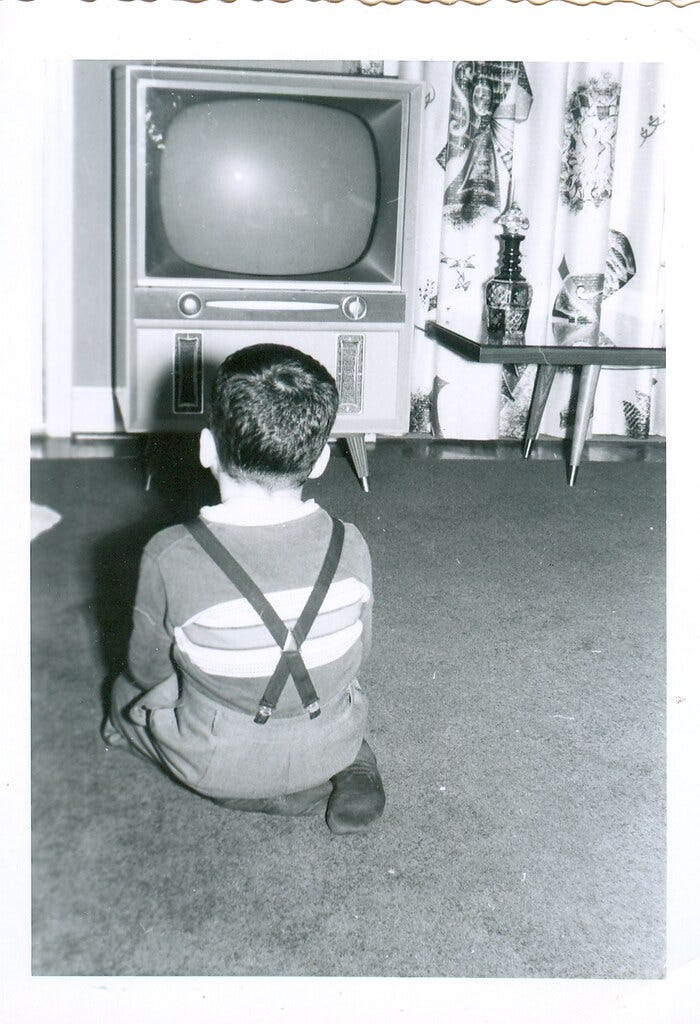
Aiden had always had a memory of coming down the stairs silently one night, of Dad’s morose face, lit by the blue light of the television in the dark, staring longingly at something he could no longer access.
My dad was always an odd guy. He was the son of a Holocaust survivor who had been through unimaginable traumas and never really recovered, a woman who was a brilliant pianist and painter but did not know how to relate to other human beings, and a sad, quiet man whose father had died when he was a small boy and whose mother repeatedly threw away all of his toys and mocked him ruthlessly, a man who preferred to spend his time in the basement building intricate miniatures that included a tiny crossbow that worked so well it put a bolt through the wall. My father was undoubtedly their child: brilliant, incredibly awkward in person, physically distant, and couldn’t hold a conversation to save his life unless it was in a professional context or one of five stories he frequently retold.
I do not remember him hugging me, except to awkwardly pat me on the back, which suited me just fine, because I didn’t like being touched either. When I was five years old, he taught me to memorize the St. Crispin’s day speech in Henry V and various Yiddish curses, which he convinced me to relay to my elderly great uncle. That was the way that we bonded. We never really spoke of personal matters, just his special interests, which in turn, became my special interests. We spent many hours going to fencing lessons together and discussing Civil War battle strategies. When I was seven, I started writing a “history” of World War II in an attempt to impress him. I never finished it. The older he got, the sadder and more withdrawn he got. I truly think he wanted to connect with us in a different and more meaningful way, but was never able to figure out how to do it.
The thing that always impressed me about my dad, the thing that always made him seem so larger than life to me, was how competent he was in the areas of life that weren’t personal. He always knew what to do if there was a problem, who to contact, where to write a letter, how to phrase something so it was kind of a threat but not really. How to get things done. He did the Inquirer crossword in ink. I always knew that if I didn’t know the answer to something, I could ask him, and he would know. It was a safety net of sorts. Dad was always there. Even when our relationship was distant, even when he couldn’t seem to find a way to talk to me, I knew that if I had a concrete problem to solve, he would fix it.
Currently I am coming to terms with the fact that the person I knew as my dad, as little as I knew the real him, isn’t there anymore. He is walking, and he is talking, but that is a different person in his body. My dad wouldn’t have screamed at me because I tried to help him mail a letter. My dad wouldn’t be confused about extremely basic legal procedures or ask me the same question over and over again, even when the answer was before him in writing. None of this is him. We don’t have a diagnosis yet but it’s been clear for a long time that something is wrong, and within the last few months, things have fallen off the plateau. I am finding that I am the one having to pick up the slack of knowing what to do. Fixing the problems. Making it happen. My mom and sibling keep thanking me for handling everything, and part of me wants to scream, you could do it too! But this is a family where that person was always Dad, and Dad can’t do that anymore. So it has to be me.
One of the things I’ve discussed at length with my therapist is whether or not I love my parents. I keep getting stuck on the definition of the word. Strong affection for another arising out of kinship or personal ties. They raised me but I don’t often feel affection for them, and perhaps this is due to the complicated history of family, their own traumas and their failure to address them and how that in turn has rebounded on me, perhaps this is due to my own emotional stuntedness and neurodivergence. But as I am looking at powers of attorney and trying to call doctors and lawyers and fix things for them, I wonder whether love isn’t also sometimes just the refusal to give up on someone when they desperately need your help. My parents tried their best in their own way, and even when they failed me, I have the ability and the choice to avoid failing them. I can do these things for them. And I will do them, regardless of how I feel about it.
I don’t really have anything coherent to say in this newsletter, unfortunately. I am sitting here, alone in my living room, realizing that the parent I have known for almost 40 years, the man who once drove across several states and three hours because I forgot some important paperwork I needed for college, gets lost going to the pizza shop he has patronized every week for decades, and I probably need to find a way to take his keys away from him. I’ve known this was coming for a while, but it’s unavoidable now, and now is the time that I have to fix things. I don’t even really know how to feel about it. Whether I am sad, or resigned, or what even exactly I am sad about. It, to put things very bluntly, fucking sucks.
I am writing. I am working on Leo’s book. It is an outlet for complicated feelings about family, but it also has its silly and ridiculous moments that have brought me joy in a time when it feels like joy is something impossible to experience. I don’t know when I will finish it, because sorting things out for my parents has consumed my life for the moment, but I am working on it, even when it’s just a few hundred words at a time when I’m awake at 3am redrafting emails to doctors. Maybe that will be be the good thing that comes out of this, however it ends up getting published.
And so, with that, I will disappear back into the ether for a little while, although you can find me on various forms of social media. I hope to have something to share with you soon that isn’t this. And I am grateful to all of you who have been reading, to everyone who has sent me kind messages about both my writing and my father.
As always, thank you.
— Ari 🧡
Ari, This right here is a beautiful essay. A real work of art. You had nothing much to say and you made art. I thank you. It helped.
Ooof, this was incredibly relatable, even though my circumstances were/are different.
My step dad, the only dad I really had, died last year and my feelings about it have been way more complicated than I expected. I was a kid who seemed to have a bit more intelligence than average, but in a family of not-book smart people I was the black sheep because of it. And I completely failed to live up to any sort of potential I supposedly had. I have a cordial relationship with my mother now but there’s no depth to it. She has done things to me that I consider unforgivable but that we will never talk about.
My husband’s mother was a play therapist for high-needs autistic kids for most of her career but willfully refuses to see or accept that my husband is on the spectrum - no, he was just a gifted child 🙄. He suffered in similar ways to you: told he was hard to love, hard to parent, and as a “gifted” kid he had high expectations placed on him. He’s the most lovable person I’ve ever known, though. I love my in-laws and have a much closer relationship to them than my own parents, they are wonderful people but they often failed as parents.
I can’t wait for Leo’s book but I’m also more than happy to read your writing in any form - including deeply personal essays like this.